Developing new national standards to control 3 safety hazards in vegetable production
The Ministry of Agriculture and Environment is drafting a new TCVN on vegetable production processes, focusing on controlling chemical, biological, and physical hazards to ensure food safety.
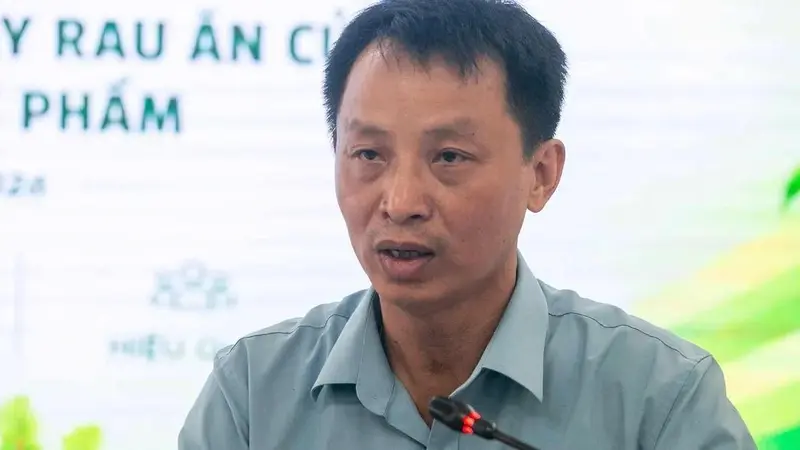
The Ministry of Agriculture and Environment has tasked the Department of Crop Production and Plant Protection, in coordination with the Fruit and Vegetable Research Institute, to draft a new national standard (TCVN) for safe vegetable production and primary processing. According to Mr. Nguyen Xuan Diep from the Fruit and Vegetable Research Institute, this initiative addresses significant food safety challenges, including soil and water contamination and the widespread misuse of pesticides.

Despite the implementation of VietGAP for over 15 years, the adoption rate remains very low, covering only 0.5 - 0.6% of the country's 1.15 million hectares of vegetable production. The primary reason is that the high investment costs and management requirements are beyond the capacity of small-scale farming households.
A key feature of the draft TCVN is its chain-based, risk-management approach. It focuses on controlling three main categories of hazards that directly impact consumer health: chemical (pesticide residues, heavy metals), biological (pathogenic bacteria, fungi), and physical (foreign materials, impurities).

Professor Dr. Tran Khac Thi, former Deputy Director of the Fruit and Vegetable Research Institute, emphasized the importance of monitoring nitrate levels. He suggested that this be included in the draft, as high nitrate accumulation can convert into carcinogenic substances, posing risks especially for vegetables consumed raw without heat treatment.

Mr. Nguyen Quy Duong, Deputy Director of the Department of Crop Production and Plant Protection, confirmed that this new TCVN is intended to support and complement VietGAP, not replace it. The goal is to simplify compliance requirements to make it easier for small-scale farmers to participate, thereby increasing the value of agricultural products and ensuring a stable supply of safe food. The standard is expected to be issued this year.
Tag: